Bits and Pieces

We’ve had three Fashion Sewing Club meetings and just Saturday morning at Treadle to go. It’s been fun to be back in the sewing groove. New faces showed up at Treadle and Claire came back after missing several months. She’s been bitten so hard by the sewing bug that she’s enrolled at MCTC and is taking classes in fashion design. We got to see some of her work in progress. She will be at the Hearts for Fashion style show at the Mall of America on Saturday, February 9th. The event is listed as 10 am-5 pm so stay tuned for further info.

Another face that we’ve missed showed up in these shoes-(fine, her feet were in the shoes, not her face!)

I hadn’t heard of John Fluevog (Fashion Sewing Club can be such an education :). Evidently he designs shoes for the likes of Alice Cooper and Madonna and opened a store in Uptown in November. Might have to make a trip just to see them all!

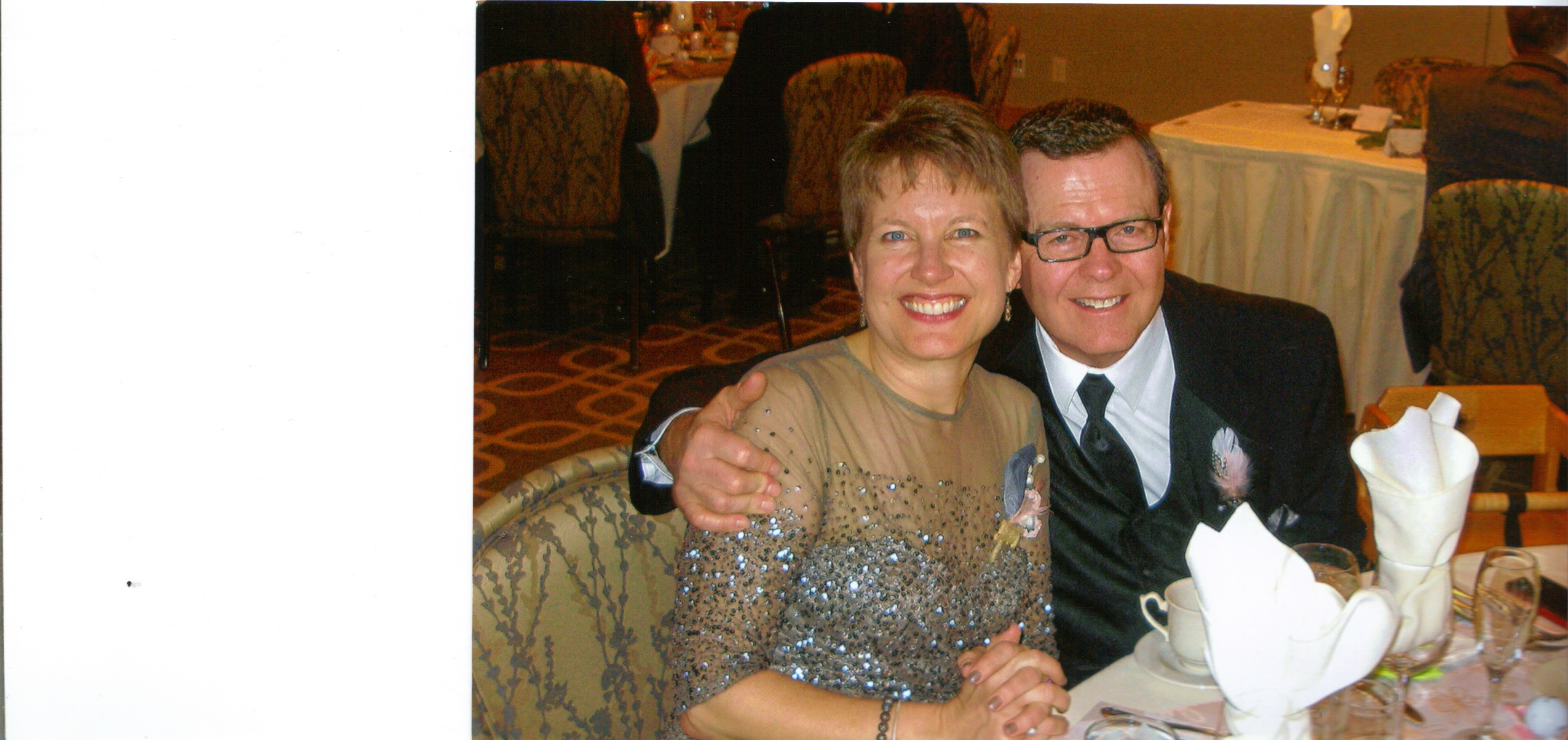
Pictures are slow in coming from the wedding but here are a few teasers-

The Shoes

The Jewels

The Dress (and the groom many years ago…)

We have one more class at Treadle before their new class calendar begins (so you can’t find this on their webpage but it’s still on ours). We call it Build a Basic Wardrobe: Casual Jacket and it will be held on Wednesday, Jan. 16 at 1:30. We define a casual jacket as easy to throw on, a bit more than a sweater or sweatshirt but less than lapels and linings. I’ve “pinned ” several jacket patterns on my “Patterns” board on Pinterest if you’d like to see them. Are you on Pinterest? It can be habit forming but it’s an easy way to keep track of ideas that you see online. Here’s the link to my board-Patterns

Serger Club at Make It Sew is next Thursday( 1/17 at 10:30 and 6:30). We will make pj pants with a wide knit band. This makes it easy to sew them for others when you don’t know where they like to wear their pants. Comfy fit and lots of options. If you need a pants pattern, Kwiksew 3980 also has the pj lace top that we’ll be using for the February Serger Club meeting. These same two garments will be the topic for Eternal Sergery at Treadle Yard Goods on Feb. 12 and March 20.

That’s enough for now. Hope to see you Saturday if you haven’t made it to Club yet. Enjoy your weekend. (Or one of my favorite quotes from the dowager in Downton Abbey, “What’s a week end?”)

Reporting from Down Under

Lucia (some of you may know her from Treadle and others as the serger teacher at Make It Sew) nabbed a great gig for house sitting in New Zealand and misses Fashion Sewing Club so here’s her Show and Tell and a bit more…

Hi,Kristin, Debbie, Laurel and all of the Treadle Material Girls group!

The first week of every month since I arrived I’ve been determined to write. Yeah; well, finally I’m getting to it. Miss my garden terribly (hope there is some shred of life left after the inferno), and, the Material Girls meetings – other than that I’d be happy to stay here. I’m 10 minutes walk from the ferry into downtown Auckland. Lots of walking opportunities – up very steep hills – the only kind of hills they have in N.Z. Just saw the tax value for the apt. I’m in and it’s unbelievably $1 Million. It’s nice but not that nice! Property here is very expensive. Greater Auckland has about 2 million people – a big place. $500,000 buys you a very, very small, 40-50 yr. old place.

Here are some pictures off my balcony –


My favorite view out the kitchen window

Devastation in the dining room

I’ve been sewing up a storm with a Brother machine – no Serger – boo-boo. Tackled the chevron striped pattern from the cover of Threads – July issue. Made the sleeveless top below to test out the pattern and my stripe matching ability. Yikes, what a job. I am going to try the dress this week. Made a couple Quincy tops (Sewing Workshop). I like the window pane knit fabric – probably not the best pattern for a check but it turned out okay. Am disappointed with the wool selections here – lots of mixes like 40% wool and 60% acrylic. Found a discount fabric store where I paid $3/ meter for the dotted knit top fabric but it’s hard to get to. I’ll have to wrangle a ride back there some weekend.

The knit top is a Marcy Titon t-shirt with a Katherine Tilton double collar. Loved making the collar – so much fun.


Just joined a website from U.K. – Wardrobe unlock’d – ever heard of it?

Summer sounds like it’s been so much fun in Minnesota. I just got up to turn the heat on! When the sun is out it warms up nicely by 1 or 2 p.m. to around 58. Otherwise it’s pretty much heavy sweater weather – but I am not complaining at all. If I get too cold I just throw on my Eddie Bauer “can-take-anything” raincoat and go splash around in the rain.

Lucia

P.S. Am open to any introductions you may want to make on my behalf to single, millionaires who are interested in spending 1/2 of each year in New Zealand, the land of Frodo, Peter Jackson and the occasional earthquake.

Great to hear from you, Lucia. Thanks for sharing!

August Fashion Sewing Club Sheets Online

Thanks for coming to Club this month. Each meeting/location has taken on a personality of its own and because of that Debbie and I have our tanks filled by the end of the week. We hope you were inspired too!
Here are a few highlights-(Club sheets can be found under Club Sheets/Garment Photos above)

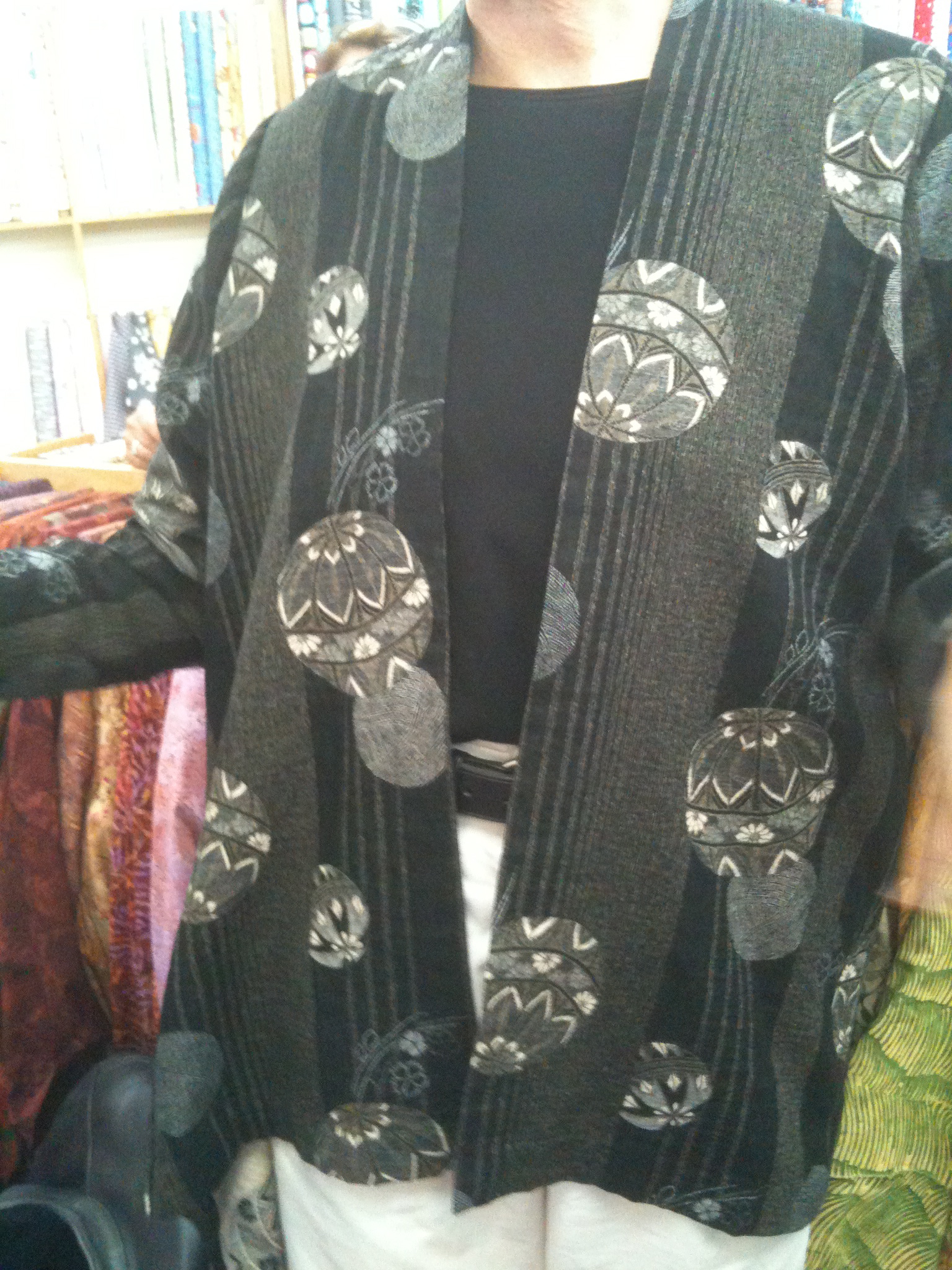
Roberta has been sewing! This is a wonderful Japanese double weave cotton that is as beautiful on the wrong (!?) side as the right side.

Su got creative using only what was in her stash. She’ll be doing a trunk show at Make It Sew on Sept. 6, 6 pm and again at Treadle in October. Can’t wait!!
A very proud grandma brought her pupil/granddaughter to model her latest project.

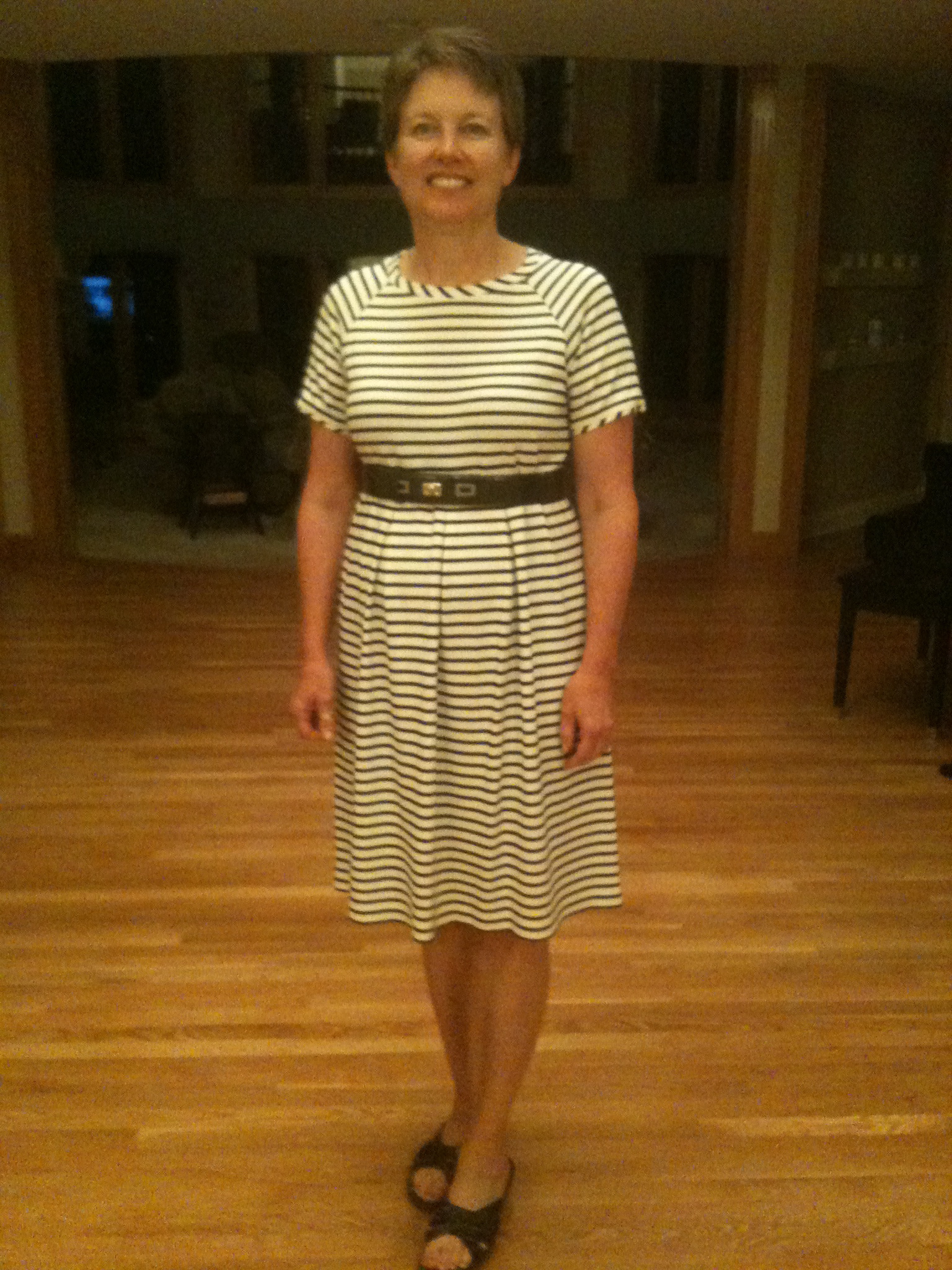
And finally, just wanted to show you the final version of the striped Anthropologie Dress-

Inspiration

Execution

Perfection (or another version, thanks to a belt from Target 🙂

(Directions for the dress can be found in the Club Sheets.)

First Sewing For Babies/Gorgeous Fabric/Three Thread Overlock

I know, the title is too long but depending on where your interests lie…

And yes, the babies are boys but this was my best photo…

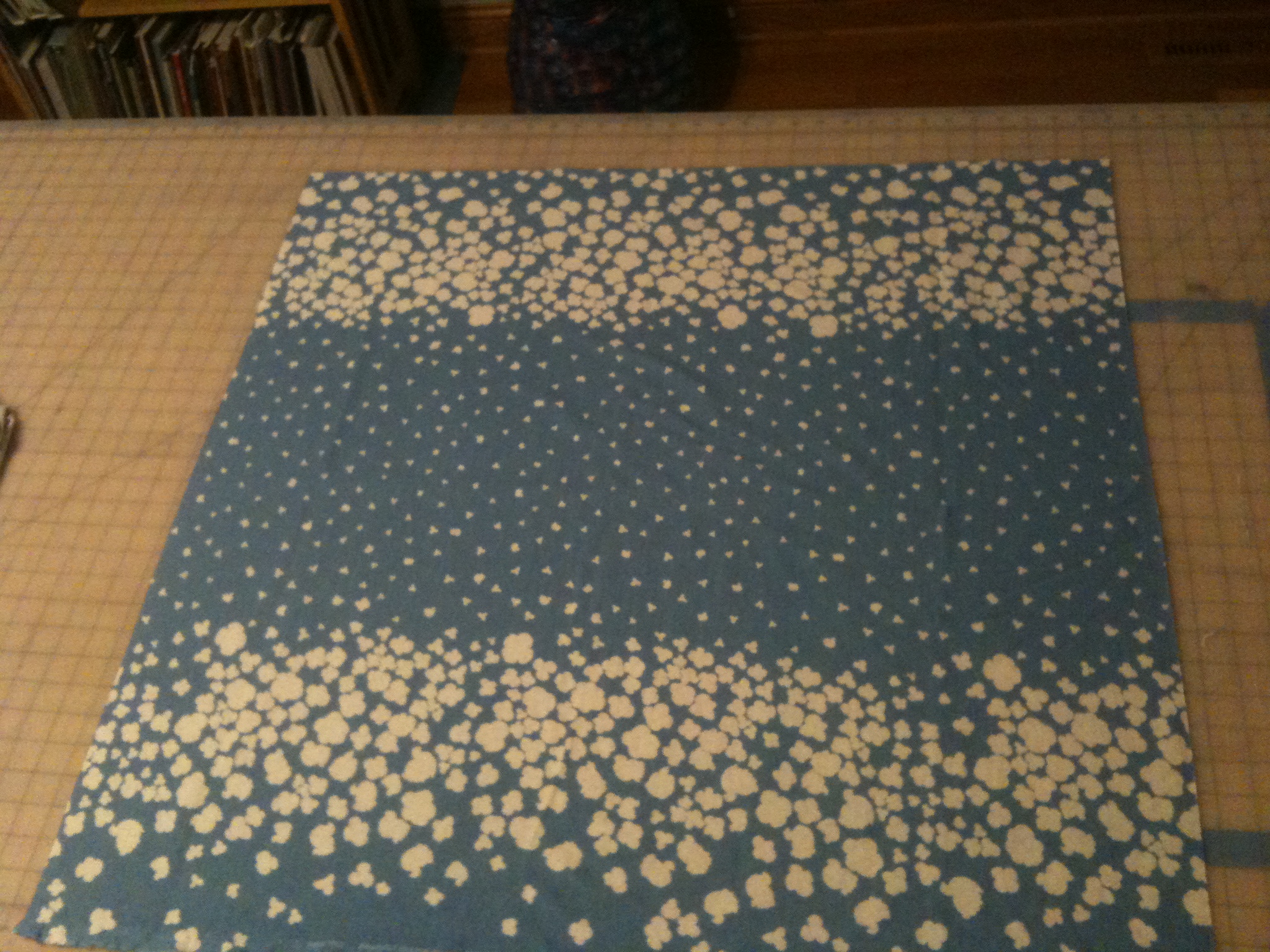
Treadle has two soft Japanese double layer pique knits, one pink, one blue. A bit spendy and only 32″ wide but in my mind that said, “Baby Layette Blanket”. All I had to do was finish the edges and since we have had quite a few serger classes lately and we often got the question, “What do you use the 3 thread overlock for?” I thought I might share what I did.

Blue is 3 thread, pink is 4 thread

For the blue three thread I used off white Jeans Stitch cotton thread in the upper looper along with a heavier poly/cotton Gutermann denim thread that I had picked up at the Expo in the lower looper.

For the four thread I used Pearl Crown Rayon in the upper looper and Heavy XP Coats and Clark in the lower looper-serger thread in needles.

Square up the fabric-selvedge says “peaceful cooing” so I left it on

Serge around all four sides leaving a tail

Using a blunt tipped needle, go back under stitches

Pull through and clip

I didn’t prewash the fabric as I didn’t want the layers to separate before sewing. The fabric did shrink 4 inches both ways but it also got thicker and the pique showed more.

I tried to take photos of turning corners without cutting threads but my camera didn’t have high enough resolution. We teach this method in our Beyond Basic Sergery (Treadle) or Advanced Serger (Make It Sew) classes. Practice makes perfect.

Here is the written version from the Babylock website, check out a serger book and you will find it too.
“Outside Corners: Stitch to the end of the corner edge, but not beyond. Stop with the needles up and raise the presser foot. With tweezers pull approximately 1/4″ of slack thread above the needles. The slack will allow the fabric to be pulled slightly to the back, clearing stitches from the stitch fingers. Turn the fabric, aligning the new edge with the edge of the needle plate. Remove any slack from the needle threads. Lower the foot and continue sewing.”

I was only trimming the tiniest edge off the fabric but if you trim more you will need to trim by hand for about 2″ at the beginning of each corner. You’ll see what I mean if you try it-the blade won’t get a chance to cut right at the very beginning and that will make everything gum up.

Can’t wait to wrap up babies in these blankets!

The Art of Fitting-In the Thick of It

Carrie writes from Peggy Sagers’ Fit Training Workshop-
(Read “The Art of Fitting-Before” blogpost first to get the full scoop.)

Here are my thoughts from day 2 of training.

Learning fit is not for the faint of heart!

The last two days of fitting classes have been exhausting. By the time we wrap for the day my brain hurts – it’s so full of information it feels like it might start oozing out!
Thursday we started off with an easy lesson, fitting tee shirts. Today, Friday, we took the full day fitting blouses, which was really a lesson on darts and armhole adjustments. The basic format of each session is to start with Q&A from the previous day or session, then we jump into fitting muslins on a partner. We have a large class of twenty ladies. That does affect the flow of the class and the information covered each day, but Peggy is dedicated to ensure each muslin is reviewed by her. However, the practice fitting other ladies is invaluable! Each evening I’ve worked on transferring the adjustments which have been pinned into my garment on to the pattern.

At times I question if I’m really “getting it”, but I’m beginning to understand fit is learned by repetition. The first time you make the right adjustment it almost feels like an accident- did I really know what I was doing? But after seeing it, hearing it, and doing it all day it does begin to imprint itself in your brain.
The class is a mix of ladies who want to teach fitting, those who just want to have muslins fit for them, and a few ladies who just enjoy classes with Peggy ; )

For now I’m signing off, it’s been a long, busy day!

Flounce Instructions-New and Improved

For those of you that were inspired by Cande’s flounce philandering, she worked very hard to get a more clear and detailed version so you can do it yourself. Thanks for taking the extra time! I’m sure she would like to know if it works for you or if you learn something she didn’t cover.

Sew, You’d Like to Flounce in 7 Easy Steps!
Kenzie Carlson

It might not be the latest dance craze, but it’s a fun (and EASY) design feature that you can add to a garment.

At the July Fashion Club, I featured two garments which the patterns were modified to incorporate a flounce. The knit top had a flounce added to the neck edge; the woven button-down not only had the neck edge flounce, but also a flounce cuff. You can refer to the July Club Sheets from the Material Girls Sewing website for specifics on those garments. Here, I want to focus on making a flounce pattern piece.

An easy flounce pattern piece is, what I call, a donut flounce. It’s in the shape of a donut and, when cut open, the inner edge is pulled straight and several donuts can be sewn together to make a longer string of opened donuts! Sounds easy!

Supplies:
• Pattern tracing paper (non-paper, fabric is best)
• Scissors
• Rotary cutter (for smooth cutting edge, but scissors okay)
• Cutting mat (if using rotary cutter)
• Tape measure
• Seam gauge
• Straight pins
• Pen
• Ribbon or string (for non-math method)
• Calculator (for math method)
• Garment (or pattern pieces) to attach flounce to

STEP 1: Deciding on Length of Flounce:
• Measure the garment (or pattern pieces) where the flounce will be attached to. Then, make it a tad longer (for good measure!).

Good to know:
Rather than making one large donut to follow the whole neck line, make smaller donuts. This way, there will be more waves (fullness) in the flounce as well as better use of the fashion fabric by using smaller pieces (perhaps, good use of larger scraps).

In a case of a vee neck, you can measure the back piece (shoulder seam to shoulder seam) as one donut cut from a single layer of fabric. Then, measure ½ of the front (shoulder seam to center front) as one donut cut from a double layer of fabric. The donuts can be pieced together at should seams and center front. Summary: back = 1 donut; front = 2 donuts.

Or, another vee neck idea, measure from back center to front center as 1 donut cut from a double layer of fabric. The donuts are pieced at center front and center back. Summary: left half = 1 donut; right half = 1 donut.

For a rounder neck opening, measure the back piece (shoulder seam to shoulder seam) as one donut cut from a single layer of fabric. Likewise, measure the front piece (shoulder seam to shoulder seam) as one donut cut from a single layer of fabric. Piece at shoulder seams. Summary: back = 1 donut; front = 1 donut.

STEP 2: Making the Donut’s Inner Circle:
The inner circle of the donut aligns with the garment where the flounce is attached.

• You just measured the garment (deciding on the length of flounce) and added a tad for good measure (say, an inch). Now, add any seam allowance to piece the flounce to other flounces (say, a narrow seam allowance of ¼” ). Let’s call this measurement INNER.

Non-Math Method:
• Cut a length of ribbon (or string)as long as INNER.
• Shape nicely into a circle on the pattern tracing paper.
• Carefully, use the pen to trace the ribbon.
• Remove ribbon.
Good to know: Doesn’t need to be a perfect circle!

Math Method:
• Calculate the Radius (distance from the center point to the donut’s inner circle).
Solve for Radius: Radius = Inner / 6.28 (note: 6.28 = 2 * pi)

• Stick a pin through the zero mark on the seam gauge and into the pattern tracing paper. (We’re making a makeshift compass!)

Or, stick the pin into the pattern tracing paper and snuggle the tape measure next to it, so the tape measure can swing on it’s edge in a circle fashion! Ta-da, makeshift compass.

• Holding the pin steady with one hand, take the other hand and place the pen at the Radius number on the seam gauge (or tape measure). Best you can, swing the measuring device (marking a line with the pen) in a circle fashion around the pin.

STEP 3: Deciding on the Width of the Flounce:
• Add up and let’s call this WIDTH:
o Seam allowance to attach the flounce
o Width of the finished flounce (suggestions: 2 ½” for neck line)
o Hem (suggestions: knit – no hem; woven – ½” for a double turn of ¼”)

STEP 4: Making the Donut’s Outer Circle:
• Place the seam gauge (0” spot) on the donut’s inner circle.
• Place the pen at the WIDTH number on the seam gauge. If you’re lucky at that spot on the seam gauge, there might be a hole to stick the pen into!
• Keeping your eye at the 0” spot, move the seam gauge along the inner circle, marking the outer circle with the pen. Go slow.

STEP 5: Cut Donut Pattern Piece:
• Carefully (and slowly), use the rotary cutter to cut pen lines.

STEP 6: Cut Opening to Donut Pattern Piece:
• Fold donut pattern piece in half, making a ½ circle. Make sure to align outer and inner edges as best as possible.
• Finger press only ONE fold.
• Open pattern piece back into a full circle.
• Cut along finger-pressed line.

STEP 7: Check for Flounce Fullness:
• Open pattern piece so the inner circle becomes a straight line. Magically, the flounce fullness and waviness appears below!!

• Put the pattern piece next to your body where the flounce will end up at. Remember that the flounce will end up narrower than the pattern piece. So, envision what it’ll look like after the fabric is hemmed and sewn to the garment.
o Does the width look too narrow or too wide? Remake the pattern piece adjusting WIDTH.
o Does it look too full (clown-like)?? Remake the pattern piece by increasing INNER. Perhaps, too many small circles are piecing together.
o Does it look too flat?? Remake the pattern piece by decreasing INNER. Perhaps, make this pattern piece into 2 smaller donuts.

Good to know:
The beauty of using fabric-type pattern tracing paper (over paper) is that you can test what the flounce will look like before cutting into the fashion fabric. Granted, though, the fashion fabric will be different in drape than the pattern tracing paper, especially if using knit. But, at least, you’ll be in the ballpark!

TIPS for Dealing with Stabilizing and Hemming:
After cutting your fashion fabric (and before cutting it open to make it straight), it’s a good idea to stabilize the fabric. Cutting a circle shape means that you’re working with a bias and, especially with wovens, bias can get stretched.

Stabilize with a spray (or machine stitch the inner circle) before folding the donut in half and finger pressing the fold to make the opening cut line.

Stray stabilizer on wovens is handy for a nice, flat hem! After stabilizer dries, finger press the outer edge ¼” (it kinda stays!!) and, then fold that over another ¼” and finger press. Follow this with a hot steamy iron and it’s ready for machine sewing!

TIPS for Attaching the Flounce:
Remember, the flounce was cut with a tad extra length? It’s best to have a bit longer flounce than to end up short!

To attach multiple donut flounces, I found the most accurate (and less frustrating) method is to attach the flounces to the garment, then to each other.

To do this method:
• Begin (and end) sewing the flounce to the garment at about 2” in from the finished flounce-to-flounce seam. You’ll end up with the flounce ends not attached.

For instance, if you want the front and back flounce donuts to join at the shoulder seams, start (and finish) attaching the front flounce 2” from the shoulder seam on the garment.

• After all the flounces are attached to the garment, attach them to each other while aligning the flounce to the garment. This way, you’ll take up the extra length into the seam allowance between the flounces, which can be trimmed away.

• Now, attach the remaining flounce to the garment.

I’ve Got the Blues

20120606-163300.jpg
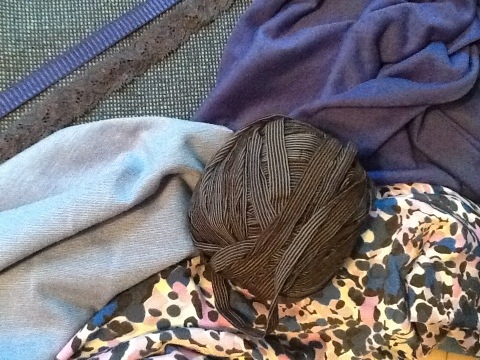
The June edition of Fashion Sewing Club is approaching quickly (first meeting: Saturday at Treadle) and I’m about ready to change the color of thread in my machines. It’s about time but I must say it has been a time saver and most items are matching each other (a new concept for me ;)).

See if you can guess which items match the garments at Club.

On another note, I ran into a Material Girl in the Joann parking lot (no damage ;)) and she turned me on to the Joann Fabric iPhone app. Very simple, it shows you which coupons are current, you download what you want to use (a matter of a second) and you read or show the coupon number to the clerk. No more sifting through old/new coupons. I would like to see a feature that gives me the dates for upcoming pattern sales. Maybe I’ll make a request-or we all can and maybe they’d make a change!

Dress Forms Revisited-New Joann Fabrics Open

Peggy Sagers had over 300 people watching Monday night as she unveiled the new dress form she is offering on her website. It looks great and the price seems very reasonable, considering a custom dress form can easily cost $1000. The problem with a purchased dress form is that it doesn’t look like most of us-well, most of the Material Girls anyway. Someone has to be a standard size in order for one to exist but I don’t bump in to Ms. Standard Size often. Peggy had some tips on padding the dress form to look like your body-she fit a sheath dress to her body and then put on the dress form to aid in padding the dress form so it would be her double.

All of this led to a phone call I received this morning so I thought I’d put in a plug for a duct tape dress form-wrapped by yours truly, of course. Just kidding, I am linking our instructions so you can do it yourself. Either way-purchased dress form or duct tape, some work has to be done to get the form to look like your body so you can use it to fit garments. This was the reason we started doing the duct tape dress form to begin with. No matter what price I pay for a dress form, I have to do some shape shifting to be accurate and that takes time and probably another pair of eyes.

So here’s the deal, for $125 you come to class (or we can come to you and 3 of your friends in your home), we have the supplies and you bring a tight fitting garment that covers the part of your body that will be wrapped (neck to thighs). We wrap you in three layers of tape, cut it up the back to get you out and after lunch we will tape it back up and stuff it. You will go home with a body double that will hang in your closet or sit on the floor or a table. We take measurements as we go to keep things accurate and draw helpful points on your double to aid in fitting.

We don’t guarantee that it will be exact but you would be surprised at how the duct tape captures posture, etc. If you put close fitting garments on the dress form you will be able to see how tight or loosely you will fit garments as you make them.

It isn’t my intent to suggest that you shouldn’t buy a dress form from Silhouette Patterns, merely that there are other options. The next Duct Tape Dress Form class at Treadle is Aug. 1 or you can email Material Girls and set up a taping party at your convenience.

Joann Fabrics in Shakopee is open!!

Those of us that live on the southwest side of the Cities have been watching and waiting for the opening of the brand new store. I had to go today-the first day they opened-just to check it out. I was very happy to see a well-lit, visible classroom right inside the front door. There’s a Viking/Husqvarna dealership in back and the whole store is basically divided in half by a center aisle with fabric on the right half and sewing machines, patterns, notions and crafts on the left. Yes, about 3/4ths of the store is dedicated to sewing!

I talked to the manager and she is excited about offering classes-the old store had no visible classroom-neither does the store in Yorktown and the buzz among customers was one of excitement at the opening of a new place for sewists to shop. Everything was neat and tidy, the displays more at eye level-not much bending over to see things. The handicapped parking spaces are right outside the door so you don’t even have to cross traffic to get in the store-how thoughtful.

As I drove home I thought of one thing the classroom needed-a changing corner for trying on garments as you sew 🙂

Coffee Break Perusing

Guest Post from Kenzie Carlson

Dear Sewists,

Here are a few examples of how I use Pattern Review (patternreview.com).

I’m having a great time experimenting with making knit tee’s in a non-bias fashion using the bias Burda pattern 7509. I wondered if there’s a simple men’s tee pattern…not that I want to switch gears to make something for my husband at this time. So, I looked at Pattern Review during my coffee break from sewing.

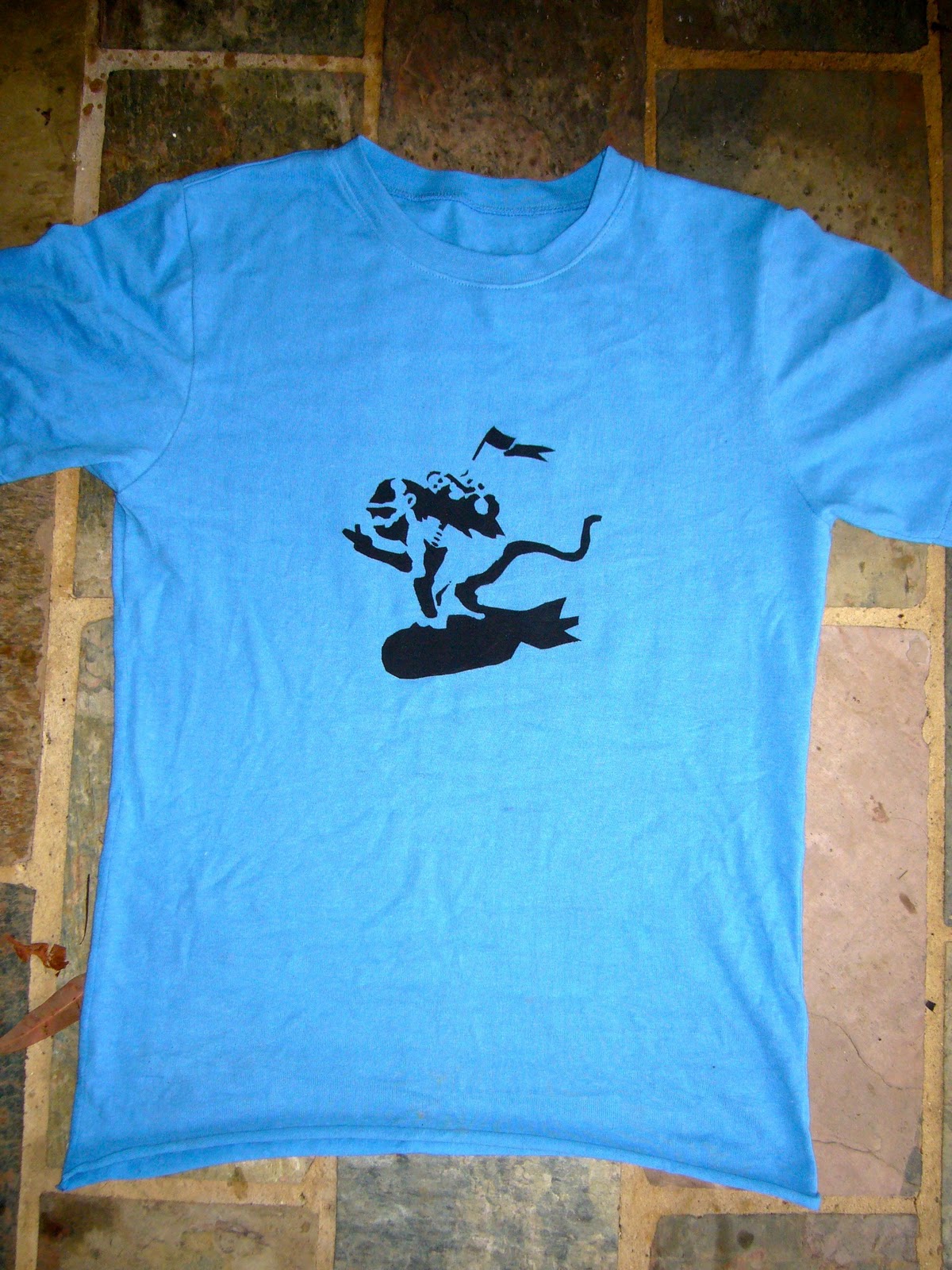
I found this posting that has directions on how to make a design on freezer paper, iron it to the shirt, and spray paint. Now, how cool is that!

I noticed that this sewer has 85 reviews, so I took a look to see what other creative things she has:

Then, THIS Amy Butler bag took my eye because MOST Amy Butler bags are made with colorful quilting material. This had wording and looked different! Turns out, it’s made with rice bags, plus there’s an inside insulated pocket for refrigerated items when using for market purchases. (This is a very creative sewer!!)

Weeks ago, killing time looking at Accessories on Pattern Review, I came across this Obi Bag from Sewing Workshop. Turns out the pattern is OOP, but by reading the reviews, I think I can duplicate it. I found material and it’s in the hopper, waiting to be made.

This sewer has 60 reviews and here’s more inspiration to tack onto my “to do” sewing list:


As I’ve mentioned before, daily (usually!), I scan the Review Gallery (under Sewing Reviews on the home page, 1/2 way down the left side) for inspiration. Pattern Review has a variety of garments and you never know what will be posted.

I look at other websites/facebook, too, such as Tilton and Sagers, which are wonderful for ideas especially on different looks for one pattern; how to change things up to get the most out of one pattern. To me, this is extremely important because the pattern work of fitting is the most time consuming. Once something fits (darts in right place, shorten/lengthen lines adjusted, etc), then the fun can begin!

Coffee break done – back to sewing!

First Time at Textile Center Garage Sale

Guest post from Kenzie Carlson to brighten a dreary Monday morning-

Good Morning, Ladies!

Thank you for the announcement of the Textile Center Garage Sale! Otherwise, I would not have known anything about it!

Yes, I did go and spend the whole day there, subsisting on the mere rations I brought along (2 granola bars and a water bottle…who knew that the years of scouting, alongside my son, were the training grounds for the Garage Sale?!). I thought enough ahead to bring ex-large and ex-small reusable shopping bags…and a strategized list of items to focus on – no willy nilly purchases today!! This would be a good place to look for those OOP (out-of-print) patterns as seen on my late night browsing on Pattern Review, fabric for those upcoming designs, notions of needed things, and reference materials.

I arrived around 8:00ish, paid a buck for parking and received a $2-off coupon for the Garage Sale and $3-off for the Reuse It Center. Stuffed those in my wallet and forgot about them…onto the Sale!

There were tons of things everywhere-in boxes on tables, under tables. I rummaged through tables (and under) of patterns dated from today back to the 50’s. 10 patterns for a buck! Likewise for books and magazines in display and price. Unbelievable heaps of fabric in every type of fiber content possible…expensive silks, wools, to scraps of leftover craft projects. Honestly, it got easier to look through the material after folks picked the top layer off. Some fabric came from a loving home as it was carefully wrapped in ribbon or string to endure the strains of the Garage Sale. (I had notes attached saying the fabric was machine washed and dried before storage!) Other fabric seemed to be happily rid of the previous life of some gone-wrong project as it was only circumferenced in masking tape and nearly falling apart. The notions were an extravagance of a multitude of junk drawers with everything possible co-mingling in boxes, on tables and underneath.

I slowly went through patterns, books, notions, fabric-once. Then, after a granola bar/water break, dove in for a second time!

At 2pm, I made it through checkouts and s-l-o-w-l-y hauled my overheaped, over weighted bags to my car. Since it was so close to the 3pm $1-bag sale, I was off to join that line. I overheard the party of 3 ahead of me (looked like an older-than-me couple with their college-aged daughter). The mom instructed strategy assignments to the other 2 on the impending break-loose bag sale and distributed HER OWN brown paper grocery-sized bags (no need to waste time stopping for bags!). “Okay, stay away from UFO’s, unless they contain LARGE balls of yarn!” Wow, what a good tip!! I had passed by the UFO’s (unfinished projects) because why would I want someone else’s bad karma projects?? Who thought to look through them for goodies??

Standing there for almost an hour, I realized there was a $2-off coupon in my wallet that I’d forgotten about! In the spirit of strategizing as did the threesome ahead, I decided to limit my fabric intake to the two bags covered by the $2-off coupon. I didn’t need to become a hoarder. I didn’t need to take ANYTHING that fit into my bag just because it was a buck. What I really wanted was 4 yards of Treadle silk fabric, originally priced $120 for $40, that everybody walked passed, unnoticed. I couldn’t decide if the mustard plaid gorgeous fabric would be the right color for a coat. Since I couldn’t decide when the fabric was close at hand, I thought to wait until the bag sale to see if fate was on my side.

Fate was not on my side. I’m still mourning the loss, but still can’t decide if the color was right. (Sounds like a bad teenage relationship….)

But, I did find some wonderful fabrics!! Since I didn’t really know what to take, I started going for the large yardages thinking, if nothing else, they would make good muslins. After going through the frenzy of gathering, I carefully packed my limited 2 bags and presented the $2-off coupon to the cashier. Yes, he accepted the coupon and the bags were FREE!!

Some of the things I ended up with, costing $25:
– 13 patterns, including a Marcy Tilton and a Silhouette;
– 17 books and Threads Magazines;
– 25 pieces of fabric yardage, including the free $1-bags;
– 4 packages of sewing machine needles, including twin and spring;
– 1 spool of ribbon;
– several sewing machine presser feet (some fit my machine, some didn’t)

I spent the evening pouring over the Threads Magazines, ripping out “valued” articles at a coffee shop in St. Paul until 9pm, then in my car until 11:30pm. Who knew that I was the ride for my son and his friend to a metal concert, to enjoy 3 bands I never heard of…. Yes, it took that long to go through the stack of Threads!

Sunday, everything got laundered, ready for sewing. When I pre-wash, fabrics go through a machine wash (regular cycle with soap) and machine dry. After the garment is made, they never see the dryer again as does the RTW in the house (except jeans). Each fabric is cataloged on a 3×5 card, including measurements pre- and post-washing, and post-drying. It’s a good indicator for fabric content. (Oh, I also toss a dye-catching sheet in the wash to give some sort of indication on the amount of dye lost in the wash.) The dry-clean-only got the washer treatment, too, because I don’t want to dry clean. The fabric is folded (and some cases, ironed) after the dryer. Surprisingly, it took all Sunday to do just this! (Thank goodness, I stopped at TWO $1-bags!)

Today, I’ll pick up my pin-head-sized sewing studio (nobody has a “sewing room” anymore….) of past project fabric laying around and incorporate the newbies into storage. The stack of my current project focus (t-shirts, blouses) grew immensely. I can hear the call to create!

Again, thanks for sharing info on the Garage Sale!